

EdgeRaptor
Tank inspection evidence, linked at the point of work.
External tank inspection means costly access at height and evidence that comes back in pieces. EdgeRaptor puts a pole camera, thermal imager and voice capture on one field rig, binding every observation to its place on the tank as it is recorded, so the record leaves site complete, reviewable and structured for hand-off to integrity systems.
Designed around external inspection of aboveground storage tanks to API 653.
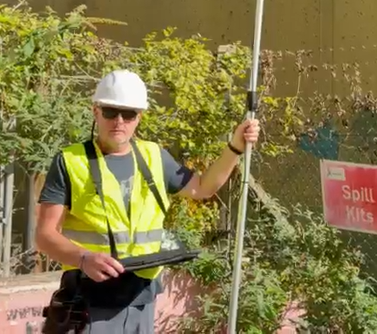
Access is expensive. Evidence comes back in pieces.
- Reaching the shell at height needs rope teams, platforms or scaffolding, and rope-access technicians work with both hands occupied.
- Photographs, video, thermal images and notes are captured separately, and the context that links them is rebuilt at the desk.
- A missing or unclear view is often found only afterwards, and can mean another access visit.
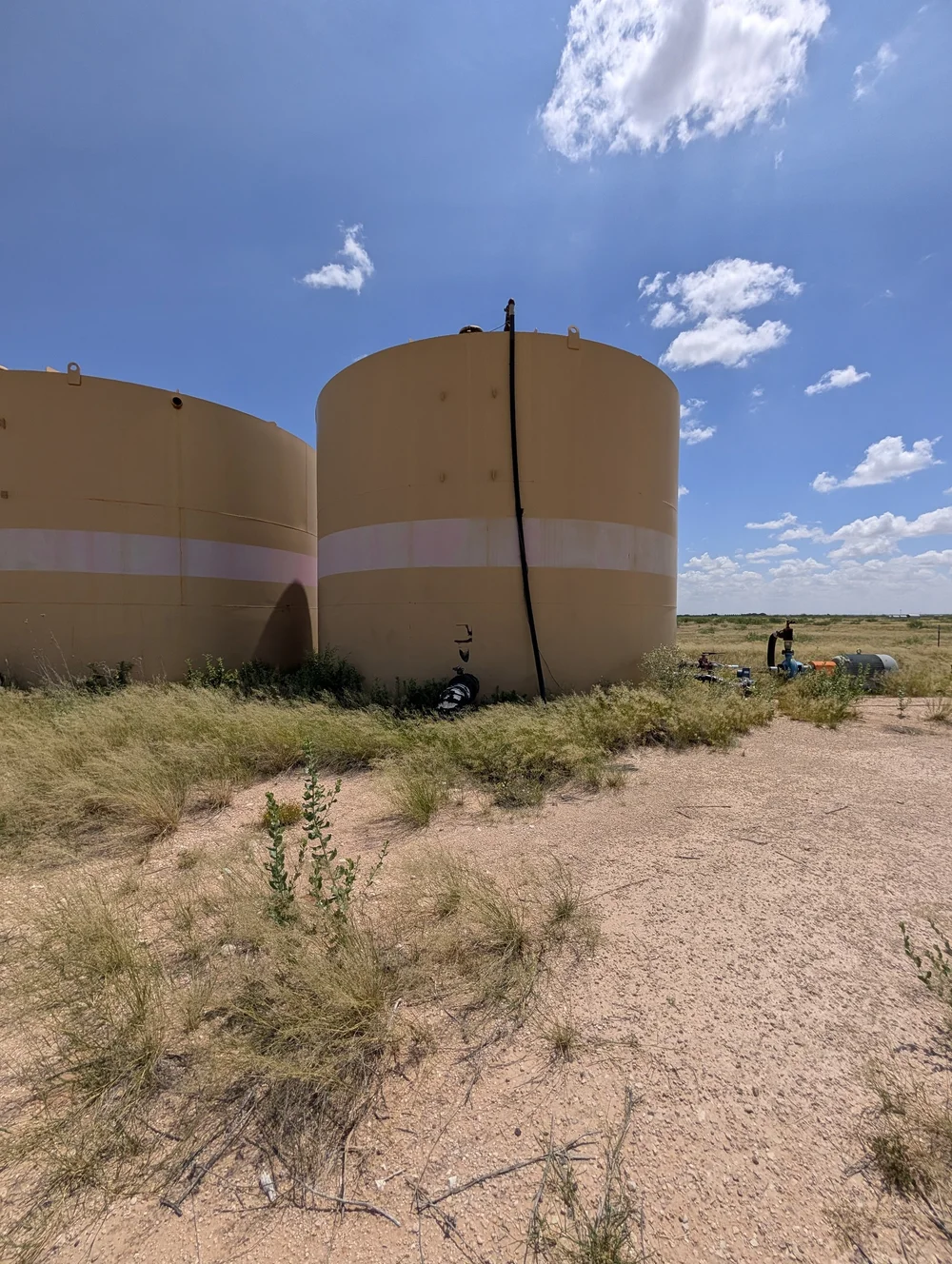
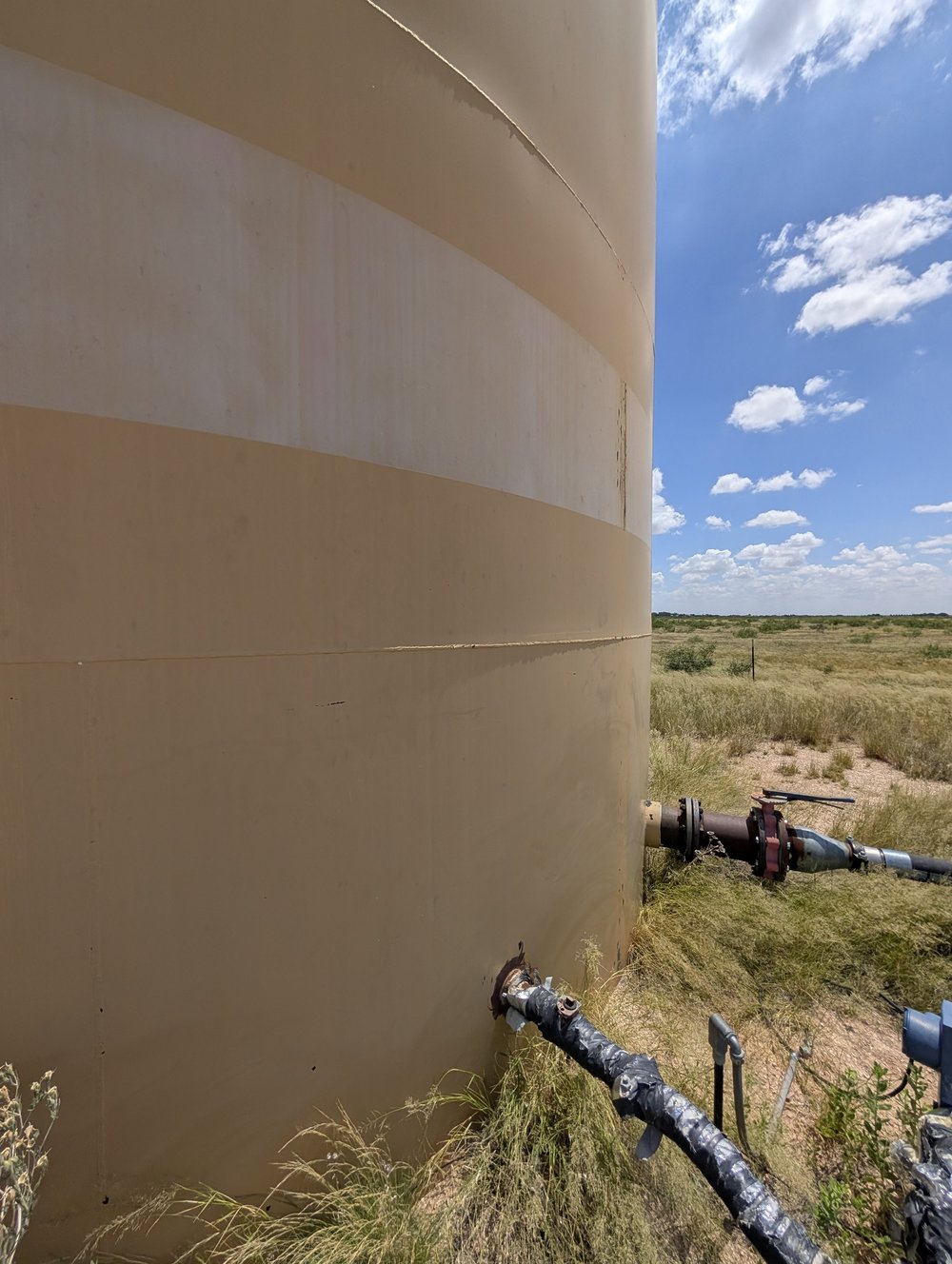
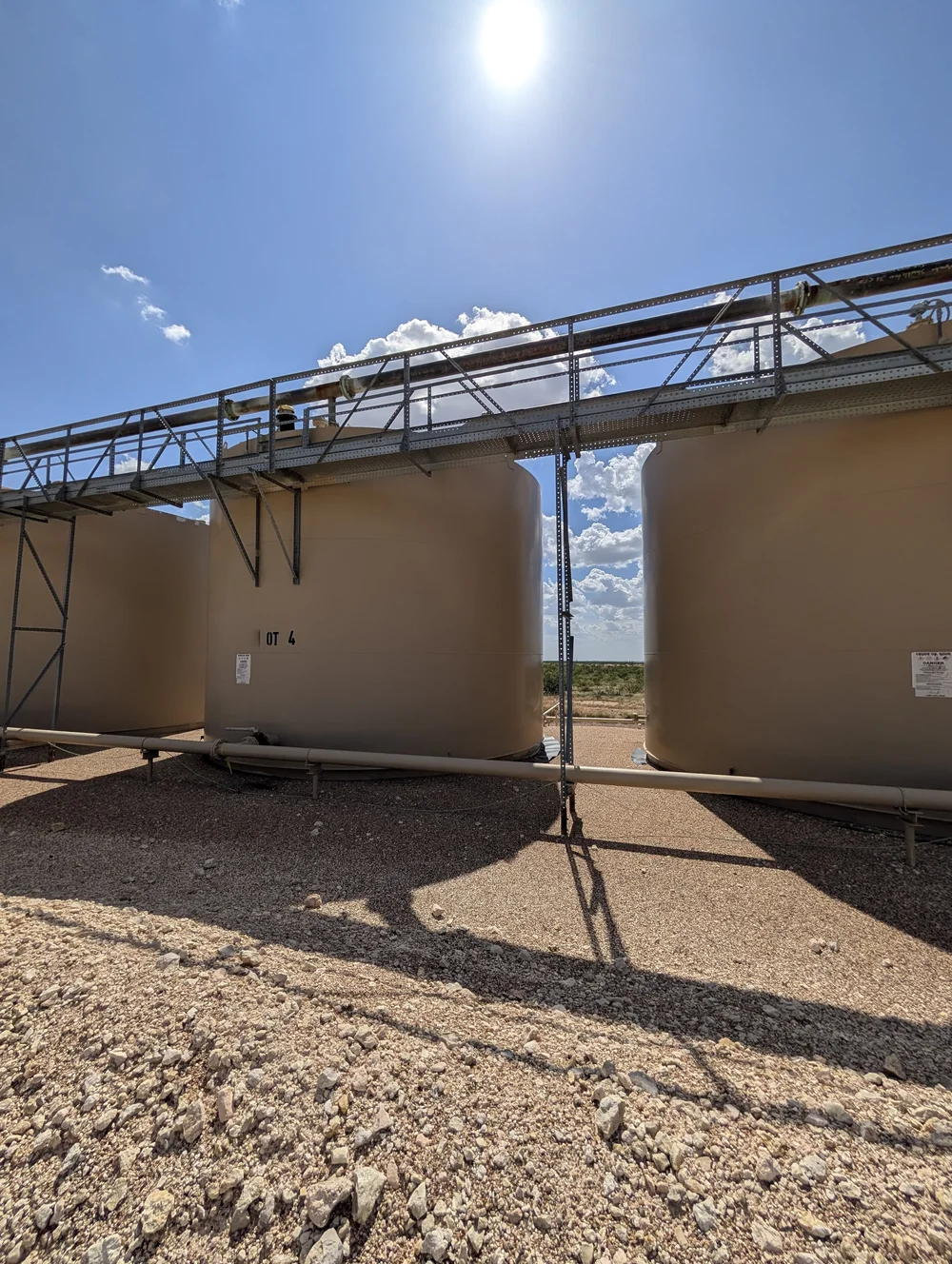
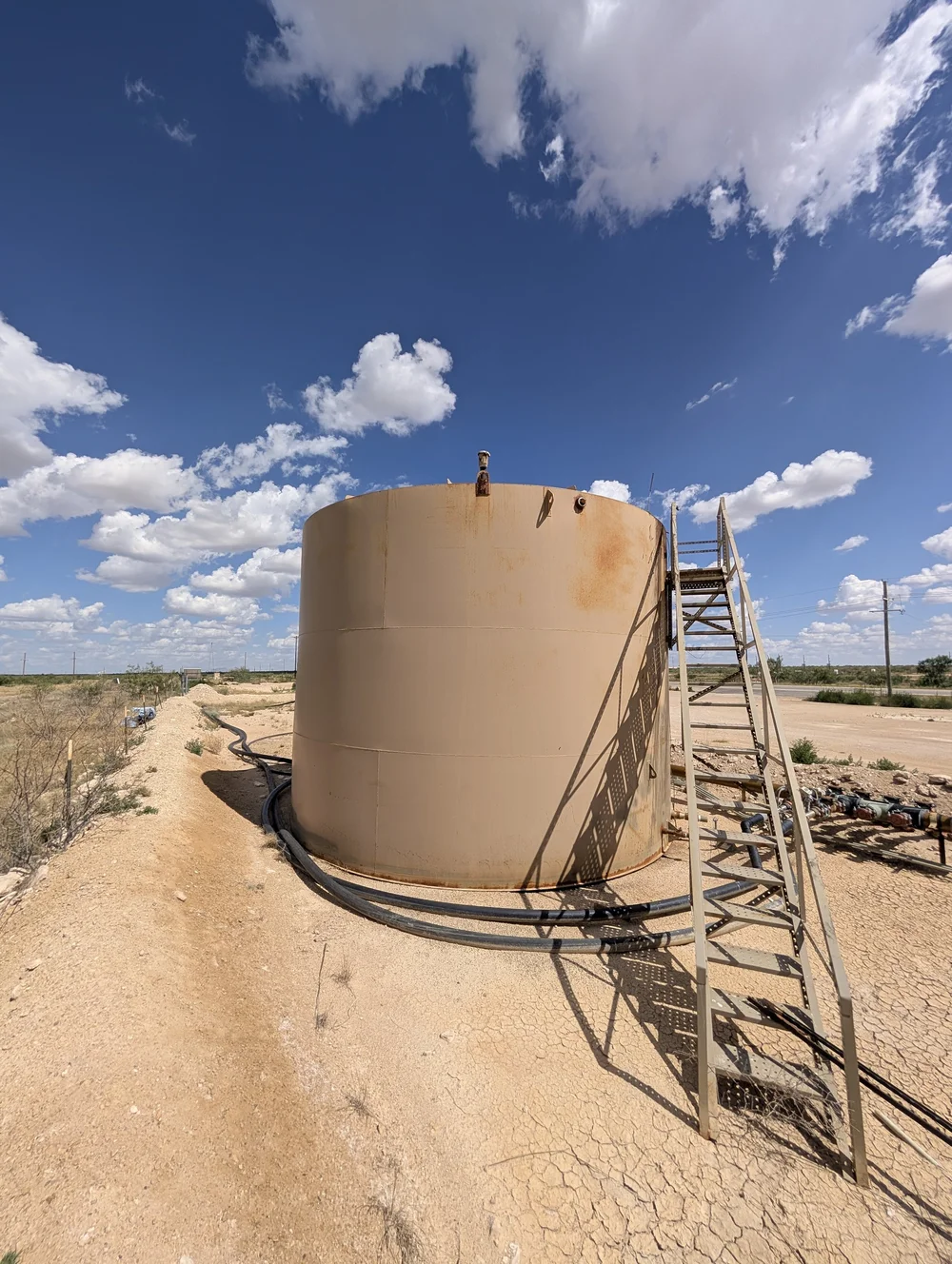
From field research on working tank sites in Texas, which shaped the design. The end-to-end rig test below ran on disused gasholders in southern England.
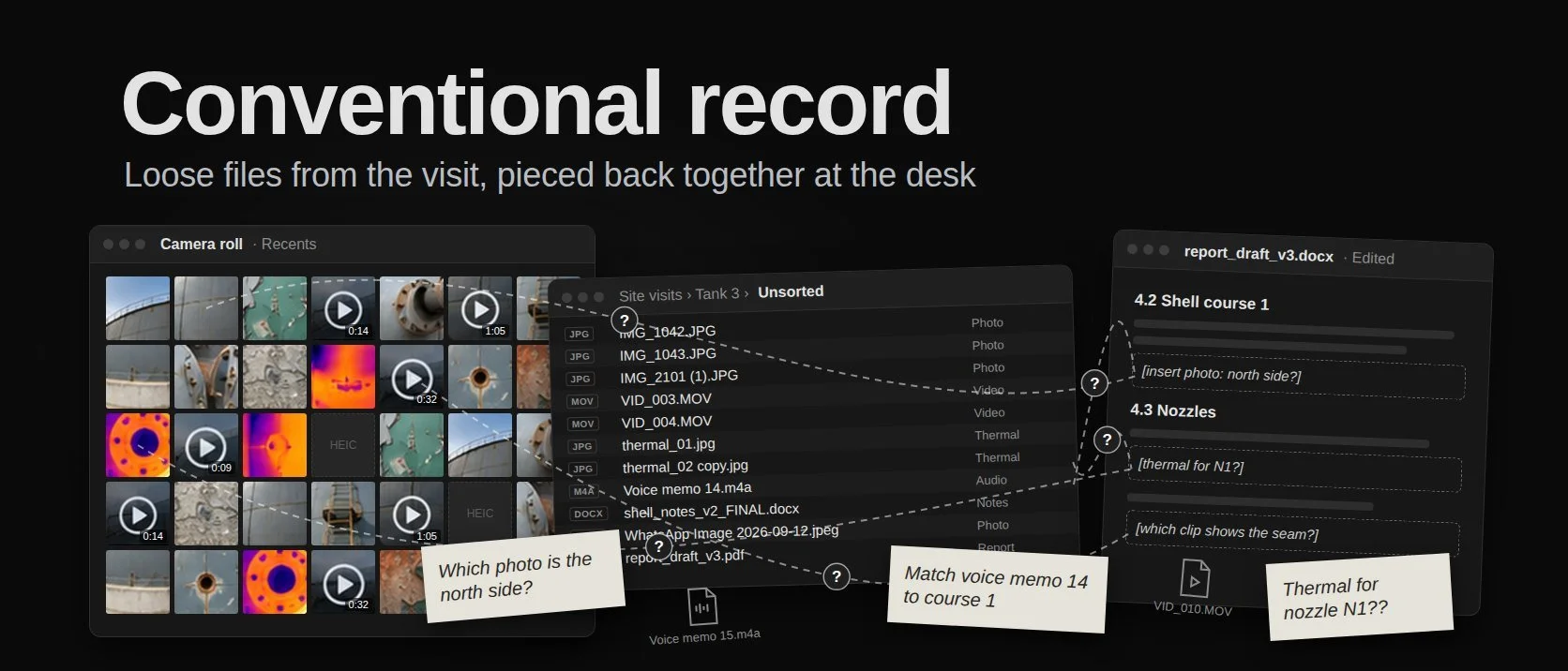
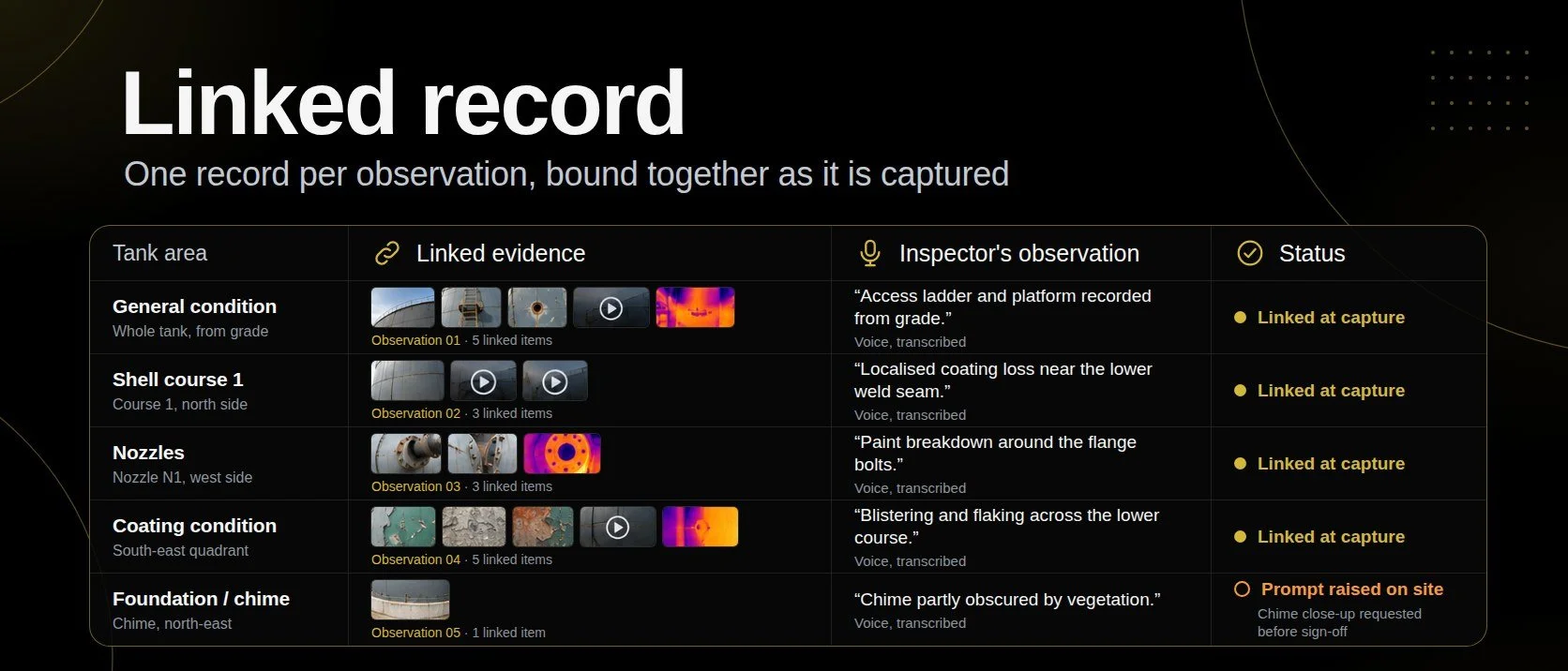
Illustration using real tank inspection media. Select an image to open it full size.
How EdgeRaptor works
-
Integrated capture rig
A pole-mounted industrial camera reaching about 10 metres, a thermal imager, tablet, portable power and 5G connectivity, carried by one inspector.
-
Bound at acquisition
The inspector speaks each observation against the part of the tank it concerns: shell course, weld, nozzle, chime or foundation. Voice comes first, because hands are busy.
-
AI evidence review on site
Vision-language AI reviews the evidence before the inspector leaves, proposes observable conditions and flags missing views. When the evidence is not good enough, it asks for another capture instead of guessing.
-
Structured output
Observations and the evidence behind them leave site as one structured record, designed to feed existing integrity and reporting systems.
- Pole pass from grade: bottom courses and chime, up to about 10 metres
- Rope access, targeted at the zones that need it
Ground first. Rope access where it counts.
A pole pass from grade covers the bottom courses and the chime, where external findings commonly cluster. What it records shows where the rope team is needed, so time at height goes where it counts.
Every view from the pole lands in the same record as the rope team's evidence, bound to the same course, weld or nozzle.
Tested end to end in the field
25 September 2026 · disused steel gasholders at a former gasworks site, southern England
- Pole-camera video captured straight into the evidence record
- Four inspection groups across five capture modalities
- Observations tied to named asset components and their evidence
- Vision-language AI evidence review returned while on site
- Structured asset-level record assembled, with AI-assisted summaries
Technology Readiness Level 4 for the tank application. The test proved the integrated capture and evidence workflow on representative steel structures. An operational trial on a tank in service, with inspection practitioners, would be the next step.
Built to support the inspector
-
Supports judgement, does not replace it
EdgeRaptor records observable conditions. Fitness for service, remaining life and structural integrity stay with the qualified inspector.
-
One evidence model, several standards
The architecture is standards-neutral, designed to support API 653 and EEMUA 159 external inspection.
-
Safety and site requirements
The rig in its current form is not certified for use in hazardous areas. Any use on a live site would follow that site's own permits and safety rules.